Warsaw Pact invasion of Czechoslovakia
The Glass RoomThe Warsaw Pact invasion of Czechoslovakia enters the novel through the contrast between political hope and the return of force. As Liesel revisits the Glass Room, the invasion is named as a new liberation by Soviet troops, an ironic reversal that threatens to restore the old order just as the country seemed to be waking from decades of political sleep.
The opening toward change
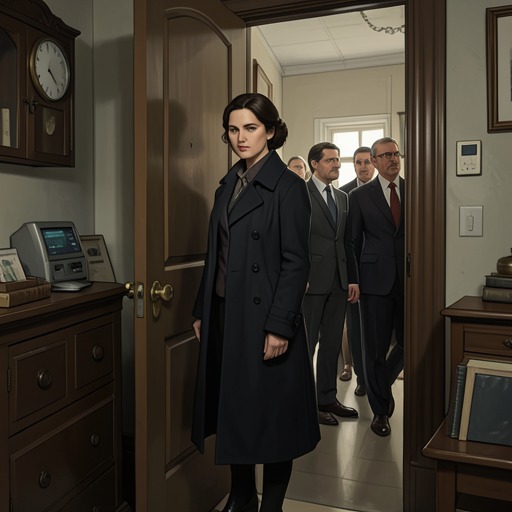
The invasion is set against a moment of cautious openness. A representative from Město invites Liesel to witness the handover of the house, presenting the visit as part of a changed political climate and a wish to resume normal relations with the country’s neighbours. He invokes the idea of “Socialism with a human face” and says that the authorities want to discuss the past and acknowledge past errors. The invitation makes Liesel’s return more than a private family matter: her presence could lend public weight to a new account of the country’s history.
Martin Landor resists the invitation because he fears that accepting it would amount to recognition of the city’s legal ownership of the confiscated property. The official counters that the political situation is not an abstract game but a matter of life and death, and that Liesel’s visit might help the country. This dispute gives the political opening an immediate personal stake: any gesture of reconciliation risks appearing to surrender a claim that has never been resolved.
The invasion and the reversal
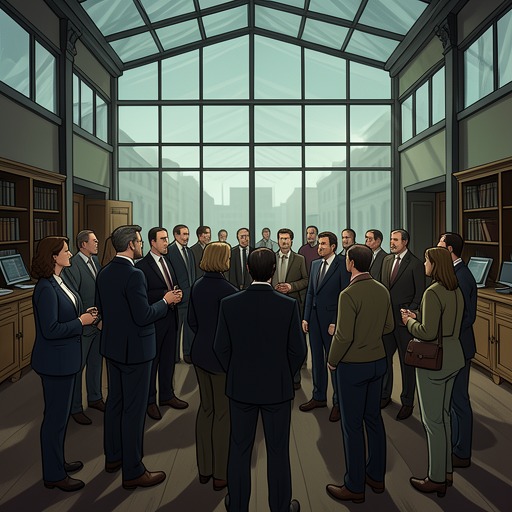
At the gathering in the Glass Room, Liesel is crowded by people and asks Hana to take her outside. Inside, the head of the urban planning department is speaking about the house’s place in European architecture. On the terrace, Liesel recalls that Laník had always unsettled her and suspects that he used to spy on her. Hana replies that he is now a Party official, comparing his advancement to Good Soldier Švejk promoted to captain.
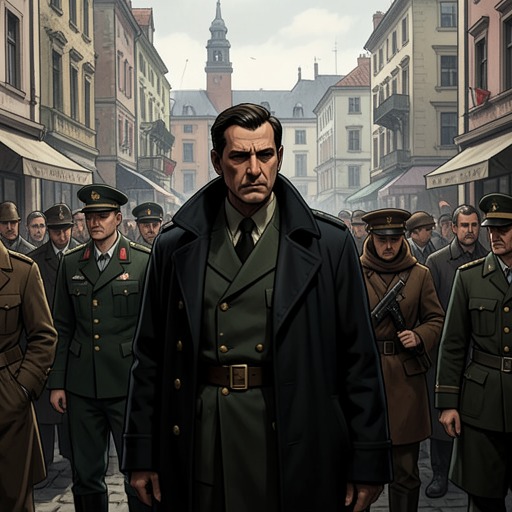
Hana identifies the deeper reversal in the invasion: just as the country seems to be becoming something different, the “fraternal Soviet Army” returns to liberate it. The language of liberation is bitterly ironic. The force described as a liberator is also the means by which the country’s tentative political change is brought under threat. Asked what will happen next, Hana predicts Normalization and the return of the Švejks, adding that they may never truly have gone away. The invasion thus appears not as a clean break with the past, but as the restoration of people and habits that had persisted beneath the prospect of reform.
A country waking, then threatened with sleep
Liesel asks Doctor Tomáš whether the future is still hopeful and whether “Socialism with a human face” is over. His answer turns to encephalitis lethargica, a rare sleeping sickness whose sufferers could remain suspended for decades. He describes a new drug, L-Dopa, that has enabled patients to wake after forty years, and compares their disorientation to the condition of the country after two decades of political sleep. The analogy makes the invasion’s timing consequential: the country’s apparent awakening is fragile, and the return of Soviet force puts that awakening in danger.
The novel links this political rupture to the personal and national experience of time. The Landors’ family history has already been divided by deportation, the murder of Jewish relatives, postwar displacement, and the Iron Curtain, which made the country seem to vanish from those who had left. Against that background, renewed contact and a public handover promise a possible reckoning with the past, but neither the invitation nor the architecture can guarantee that political change will last.
The Glass Room and historical memory
The Glass Room is described as a place of balance and reason, an apparently ageless space that handles light and volume as material and seems to deny time. The invasion and the prospect of Normalization unsettle that timeless ideal: political history enters the room through the people who gather there, through the house’s contested ownership, and through the possibility that a new opening may be reversed.
The invasion therefore marks the boundary between hoped-for recognition and renewed political constraint. Liesel’s return can bring the separated past into the present, and the city can invite her to witness a handover, but the unresolved ownership dispute and the looming reversal show that symbolic reconciliation does not settle either historical loss or political power.